Retatrutide dosage calculator
Retatrutide (LY3437943) dosage calculator with reconstitution math for 5mg and 10mg lyophilized vials. Eli Lilly triple agonist in Phase 3 trials. Live U-100 insulin syringe draw with Phase 2 titration schedule.
How to use this Retatrutide dosage calculator
This Retatrutide dosage calculator runs reconstitution math live for the most common research Retatrutide vial sizes — 5mg and 10mg lyophilized vials — and returns the exact mark to draw to on a 1mL U-100 insulin syringe. The defaults above (5mg vial, 2mL bacteriostatic water, 0.5mg target dose) match common Phase 2 study starting protocols and pull to the 20-unit mark on a U-100 syringe.
Pick your Retatrutide vial size
The supplier presets cover the two vial sizes commonly available in research formats: 5mg lyophilized vial (the standard) and 10mg lyophilized vial (for extended titration). Phase 2 clinical trials titrated from 0.5 mg up to 12 mg weekly across 36 weeks — the 10mg vial is necessary to reach the higher trial doses without weekly vial changes.
Pick your BAC water volume
Retatrutide reconstitutes well at 2mL of bacteriostatic water for a 5mg vial — a 2.5 mg/mL concentration where 0.5mg pulls to 20U, 2mg pulls to 80U on a U-100 syringe. The 10mg vial reconstituted with 2mL yields 5 mg/mL (halves every draw — 0.5mg = 10U, 2mg = 40U). Lower BAC water volumes produce hard-to-read draws at the very low starting doses.
Set your Retatrutide target dose
Retatrutide is dosed in milligrams — switch the unit toggle to mg. Phase 2 trials used a strict titration from 0.5 mg weekly up through 2, 4, 8, and 12 mg weekly to manage gastrointestinal tolerability. Most research protocols follow this titration schedule. Enter your current dose and the calculator returns U-100 units, injection volume, concentration, and doses per vial.
Read the U-100 syringe units
Pull the plunger to the indicated unit mark on a 1mL U-100 insulin syringe. At default settings (5mg/2mL/0.5mg dose), the draw is 20U. The visual syringe shows the fill in real time — drag it directly to scrub through doses live during titration planning.
The full protocol in your pocket.
Reconstitution math is step one. Running a peptide protocol means reminders, rotation, adherence, and history. PeptideMaxxers handles all of it — offline-first, privacy-first, native SwiftUI.
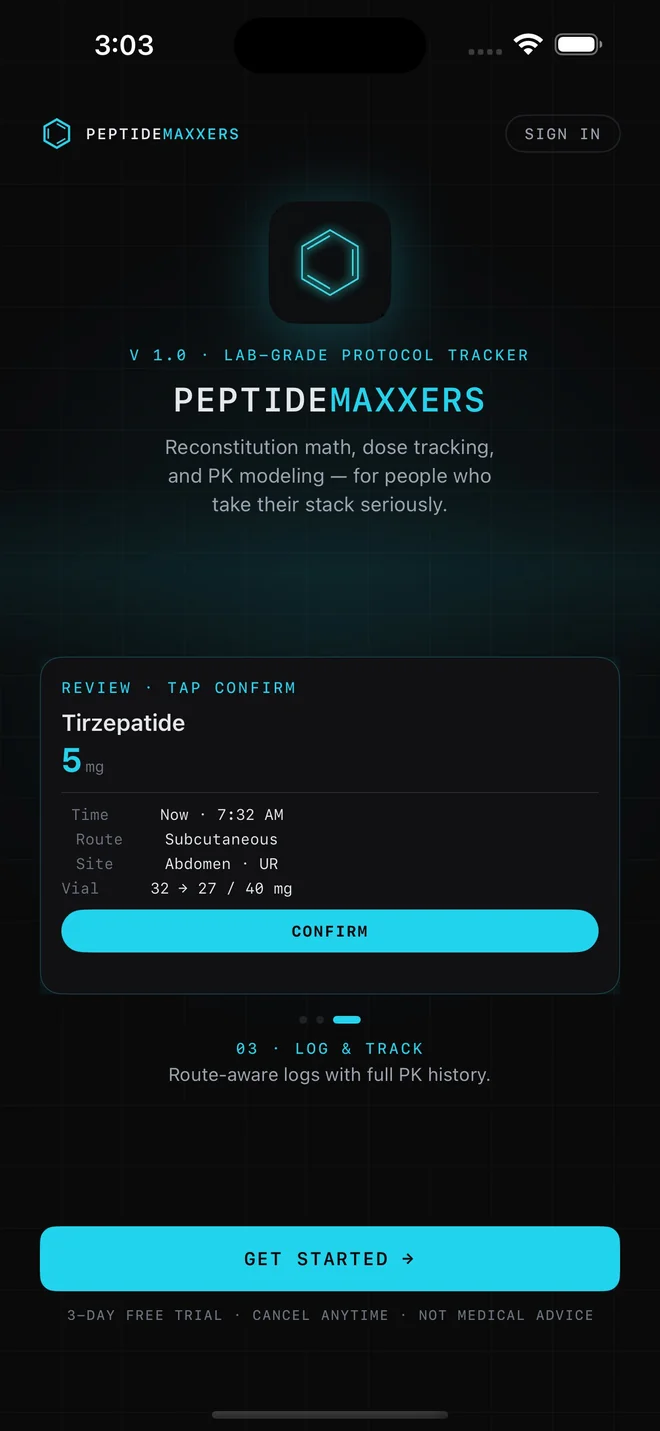
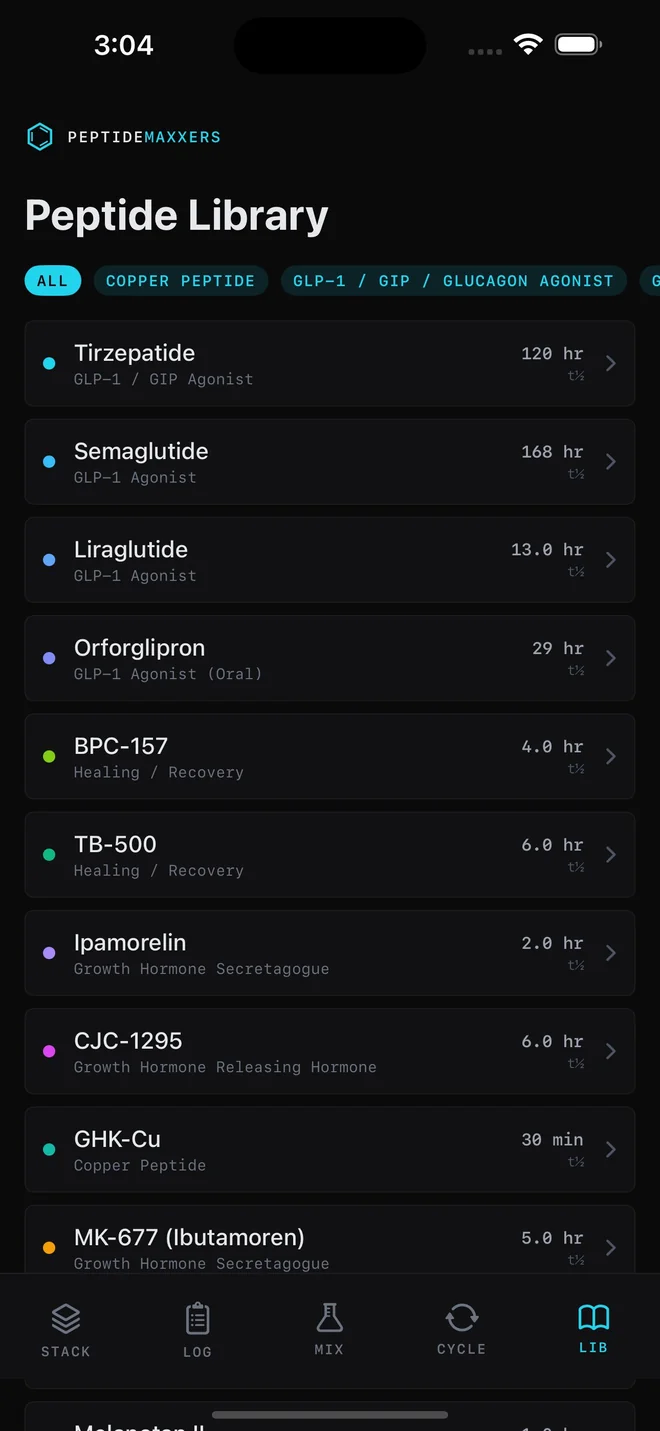
This calculator handles the math. The app handles the protocol.
Retatrutide dosage and reconstitution guide
Retatrutide (LY3437943) is Eli Lilly's investigational triple-agonist peptide that simultaneously activates the GLP-1, GIP, and glucagon receptors — the first triple agonist to reach Phase 3 clinical trials. Phase 2 results published in 2023 demonstrated 24% mean body weight reduction at 48 weeks in the 12 mg arm, the largest weight-loss effect ever reported in a clinical trial of an investigational obesity therapy. Retatrutide is currently in Phase 3 trials with FDA approval expected in 2026 or 2027. This guide covers Retatrutide dose math, the Phase 2 titration schedule, reconstitution at 5mg and 10mg vial sizes, side effects from clinical trial data, the Retatrutide vs Tirzepatide comparison (the dual agonist Lilly already markets as Mounjaro/Zepbound), cost and availability, and the FDA approval timeline.
Retatrutide dosing protocol — Phase 2 titration schedule
Phase 2 clinical trials titrated Retatrutide from 0.5 mg weekly up through escalating doses to manage gastrointestinal tolerability — primarily nausea, which is the dose-limiting side effect of all GLP-1 / GIP / glucagon agonists. The titration schedule below mirrors the Phase 2 trial protocol and is the standard reference for research dosing. Doses are not medical recommendations.
| Phase / week | Weekly dose | Frequency / route | Notes |
|---|---|---|---|
| Initiation (weeks 1–4) | 0.5 mg | 1× weekly, subQ | Tolerability assessment |
| Titration step 1 (weeks 5–8) | 2 mg | 1× weekly, subQ | Most users tolerate |
| Titration step 2 (weeks 9–12) | 4 mg | 1× weekly, subQ | Some GI side effects |
| Maintenance (low) | 4–8 mg | 1× weekly, subQ | Standard maintenance range |
| Maintenance (mid) | 8 mg | 1× weekly, subQ | Phase 2 mid-arm dose |
| Maintenance (high) | 12 mg | 1× weekly, subQ | Phase 2 high-arm dose — 24% weight loss at 48 weeks |
Retatrutide reconstitution — 5mg and 10mg vials
The 5mg lyophilized vial is the standard research Retatrutide format. Reconstitution at 2mL of bacteriostatic water yields a 2.5 mg/mL concentration; a 0.5mg starting dose pulls to 20U on a U-100 syringe. The 10mg vial reconstituted with 2mL yields 5 mg/mL (0.5mg = 10U, 4mg = 80U), which is the practical choice for users running titration schedules that reach the 8–12 mg arms — a 5mg vial doesn't hold a single 12mg dose, so 10mg vials become necessary at higher doses.
Retatrutide vs Tirzepatide
Retatrutide and Tirzepatide are both Eli Lilly compounds in the same incretin-mimetic family, but they differ in mechanism. Tirzepatide (marketed as Mounjaro for diabetes and Zepbound for obesity) is a dual agonist activating GLP-1 and GIP receptors. Retatrutide is a triple agonist activating GLP-1, GIP, AND glucagon receptors. The added glucagon agonism is the differentiator — glucagon receptor activation increases energy expenditure and lipolysis, which is theorized to drive Retatrutide's larger weight-loss effect. Phase 2 head-to-head data: Tirzepatide produced ~21% body weight reduction at 72 weeks (15 mg arm); Retatrutide produced 24% body weight reduction at 48 weeks (12 mg arm) — a faster and larger effect, though longer-term Phase 3 data is pending. Both compounds use the same weekly subQ injection protocol with similar titration logic and similar GI side-effect profiles. Retatrutide is not yet FDA-approved; Tirzepatide is approved and commercially available.
Retatrutide side effects
Phase 2 trial data identified the same gastrointestinal side-effect cluster seen with all GLP-1 / GIP agonists, with intensity scaling with dose and titration speed. Nausea was the most common adverse event, peaking during titration steps and partially adapting during maintenance. Vomiting and diarrhea occurred in a minority and were more frequent at the 8–12 mg arms. Constipation was reported by some users on lower doses. Decreased appetite is the intended therapeutic effect and is universal. Mild heart rate elevation (~3–5 bpm) was observed. Liver enzyme elevations were observed in a small fraction of trial participants and are being monitored in Phase 3. Slow titration significantly mitigates GI tolerability issues — the Phase 2 protocol's 4-week dose-step intervals are the standard for managing these effects.
Retatrutide cost and availability
Retatrutide is not currently FDA-approved and is not commercially available through standard pharmacy channels. Research-format Retatrutide (lyophilized vials from research-chemical suppliers) is the only access pathway pre-approval and exists in a regulatory grey area — distinct from the established research-peptide market for compounds like BPC-157 or TB-500 because Retatrutide is an active Phase 3 pharmaceutical with an identified manufacturer (Eli Lilly). Pricing varies widely by supplier and vial size, typically $80–$200 per 5mg vial as of 2026. Once FDA-approved, expect the commercial product to follow Tirzepatide's pricing model (~$1,000–$1,200/month list price; insurance coverage variable) and the research-format market to contract significantly as it did for semaglutide post-approval.
Retatrutide FDA approval timeline
Retatrutide entered Phase 3 trials in mid-2023, with the primary obesity trials (TRIUMPH-1, TRIUMPH-2, TRIUMPH-3, TRIUMPH-4) covering different patient populations and durations. Eli Lilly has guided that primary endpoint data is expected through 2026, with FDA submission likely in late 2026 and approval possible in 2027 — though regulatory timelines for high-profile metabolic drugs can move faster. Approval is expected first for obesity, with diabetes and additional cardiometabolic indications potentially following. The compound's Phase 2 data (24% weight loss at 48 weeks) significantly exceeded expectations and has driven elevated investor and clinical attention.
Retatrutide mechanism of action
Retatrutide's triple-agonist mechanism activates three distinct receptors involved in glucose, appetite, and energy regulation. GLP-1 receptor activation suppresses glucagon, slows gastric emptying, and reduces appetite via central pathways — the same mechanism semaglutide uses. GIP receptor activation enhances insulin secretion in response to glucose and is thought to improve adipose tissue insulin sensitivity — the addition that distinguishes Tirzepatide from earlier GLP-1 monoagonists. Glucagon receptor activation increases hepatic glucose output (counter-intuitive in a diabetes drug) but also significantly increases energy expenditure and lipolysis — the addition that distinguishes Retatrutide from Tirzepatide and is theorized to drive the larger weight-loss effect. The risk of adding glucagon agonism is the potential for hyperglycemia in diabetic patients; Phase 2 data showed Retatrutide actually improved glycemic control because the GLP-1 component dominates, but this is a key safety question for Phase 3.