TB-500 dosage calculator
TB-500 (thymosin beta-4 fragment) dosage calculator with loading-phase and maintenance protocol math. Live U-100 insulin syringe draw for 2mg, 5mg, and 10mg vials.
How to use this TB-500 dosage calculator
This TB-500 dosage calculator handles reconstitution math for the standard TB-500 vial sizes — 2mg, 5mg, and 10mg lyophilized vials — and returns the exact U-100 insulin syringe draw for any dose. The defaults above (5mg vial, 1mL bacteriostatic water, 2.5mg target dose) match the most common loading-phase TB-500 protocol and pull to the 50-unit mark on a U-100 syringe.
Pick your TB-500 vial size
The supplier presets cover the three vial sizes you'll see in the wild: 2mg lyophilized vial (smaller cycles), 5mg lyophilized vial (the standard), and 10mg lyophilized vial (extended protocols and stacking). Tapping a supplier preset auto-fills the vial milligrams and a sensible BAC water volume.
Pick your BAC water volume
TB-500 reconstitutes well at 1mL of bacteriostatic water for a 5mg vial — a 5 mg/mL concentration that lets a 2.5mg dose pull to a clean 50U mark. For 10mg vials, 2mL of BAC is common (also 5 mg/mL). The lower BAC volume is preferred over higher because TB-500 doses are large in milligram terms, and higher concentration keeps injection volumes practical on a 1mL syringe.
Set your TB-500 target dose
TB-500 is dosed in milligrams, not micrograms — switch the unit toggle to mg. Most loading-phase protocols use 2–2.5 mg twice weekly for 4–6 weeks, tapering to 2 mg once weekly for maintenance. Enter your dose and the calculator returns your draw in U-100 units, injection volume, concentration, and total doses per vial.
Read the U-100 syringe units
The "draw to" output is the only bench number — pull the plunger back to that mark on a 1mL U-100 insulin syringe. At default settings (5mg/1mL/2.5mg dose), the draw is 50U — half a syringe. The visual syringe above shows the fill so you can sanity-check before drawing.
The full protocol in your pocket.
Reconstitution math is step one. Running a peptide protocol means reminders, rotation, adherence, and history. PeptideMaxxers handles all of it — offline-first, privacy-first, native SwiftUI.
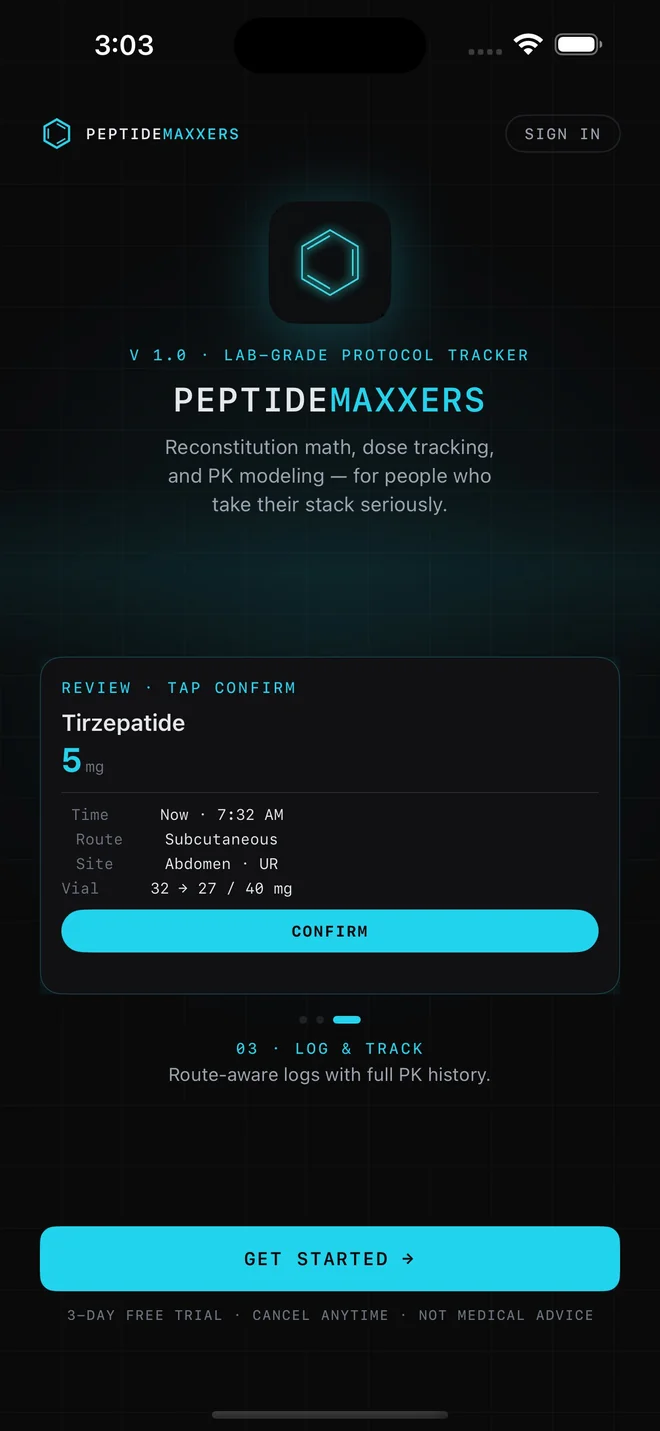
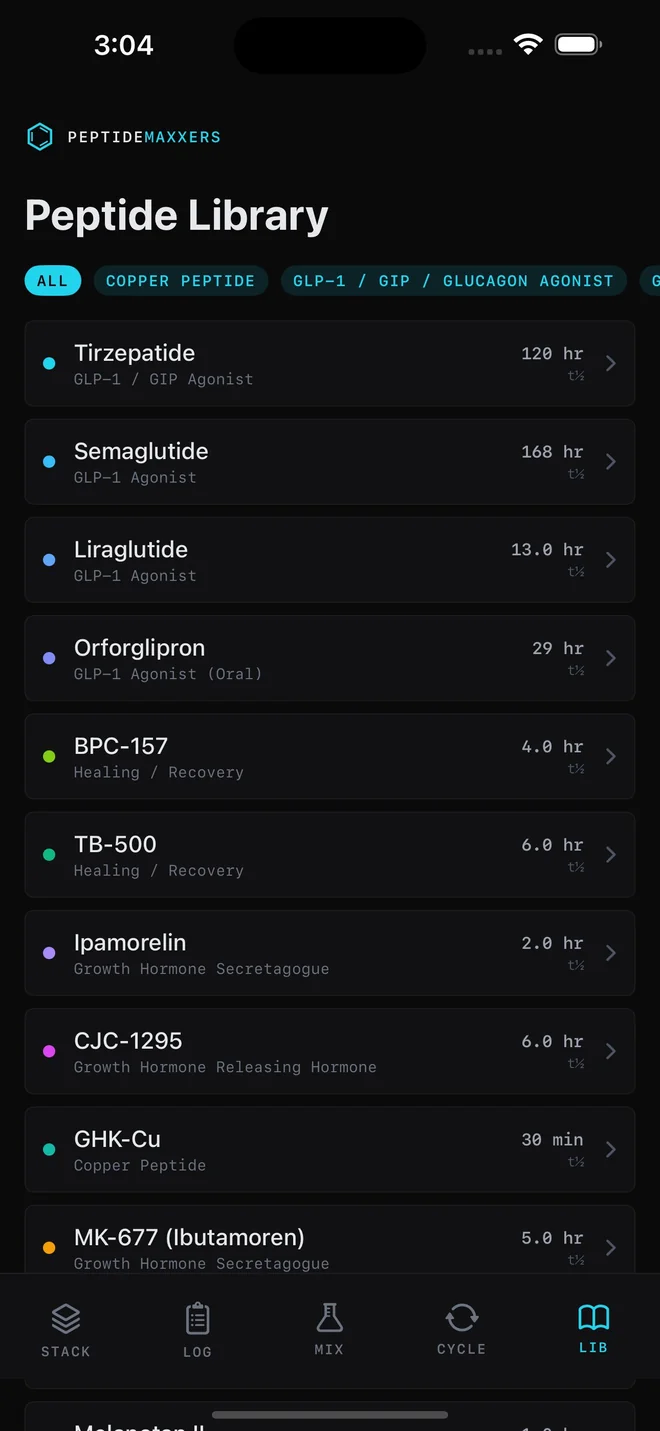
This calculator handles the math. The app handles the protocol.
TB-500 dosage and reconstitution guide
TB-500 is a synthetic peptide fragment of thymosin beta-4 (TB4), a naturally occurring protein present in nearly all human cells. TB-500 is studied for systemic tissue repair, cell migration to injury sites, actin-cytoskeleton remodeling, and recovery from soft-tissue and tendon injury. This guide covers TB-500 dose math, the TB-500 dosage protocol by purpose, reconstitution at 2mg / 5mg / 10mg vial sizes, injection sites, half-life, cycle length, and the TB-500 + BPC-157 stack — the protocol math you need to run a complete cycle.
TB-500 dosage protocol by purpose
TB-500 dosing is structured around a loading phase followed by maintenance — different from BPC-157, which uses steady daily dosing. TB-500's longer functional duration and depot effect in tissue make twice-weekly large-bolus dosing the standard. Doses below are common research and community protocol values, not medical recommendations.
| Research purpose | Loading phase | Maintenance phase | Cycle length |
|---|---|---|---|
| Acute soft-tissue injury | 2.5 mg twice weekly | 2 mg once weekly | 4–6 weeks loading + 4 weeks maintenance |
| Tendon / ligament recovery | 2–2.5 mg twice weekly | 2 mg once weekly | 6 weeks loading + 4–6 weeks maintenance |
| Systemic recovery / wellness | 2 mg twice weekly | 2 mg once weekly | 4 weeks loading + 4 weeks maintenance |
| Hair growth research | 2 mg twice weekly | 2 mg weekly | 6–8 weeks |
| Bodybuilding / training recovery | 2.5 mg twice weekly | 2 mg once weekly | 4–6 weeks loading then taper |
TB-500 reconstitution — 2mg, 5mg, 10mg vials
TB-500 is most commonly sold in 2mg, 5mg, and 10mg lyophilized vials. The 5mg vial reconstituted with 1mL of bacteriostatic water yields a 5 mg/mL concentration; a 2.5mg loading dose pulls to 50U on a U-100 syringe and a 2mg maintenance dose pulls to 40U. The 2mg vial reconstituted with 1mL yields 2 mg/mL — a 2mg full dose pulls the entire 100U syringe. The 10mg vial reconstituted with 2mL also yields 5 mg/mL, doubling cycle coverage at the same per-dose draw.
TB-500 injection sites — subQ and IM
Subcutaneous in the abdomen or flank is the standard for systemic TB-500 dosing — TB-500 is well-tolerated subQ and the depot effect in tissue means rapid bloodstream entry isn't critical. Intramuscular injection near the injury site is used in some tendon, ligament, and soft-tissue protocols on the same logic as BPC-157 — local concentration at the target tissue. TB-500's mechanism on cell migration means the peptide travels to injury sites regardless of injection location, so subQ dosing far from the injury is a valid protocol. Rotate sites to avoid local irritation.
TB-500 half-life
TB-500 (the synthetic fragment) has a serum half-life of approximately 6 hours, but the depot effect — TB-500 binds to actin and accumulates in injury-affected tissue — extends the functional duration to days. This is why TB-500 is dosed twice weekly rather than daily: the tissue reservoir maintains active concentrations between injections.
TB-500 cycle length
TB-500 cycles are typically structured as a loading phase (4–6 weeks of twice-weekly dosing at 2–2.5 mg) followed by a maintenance phase (4–6 weeks of once-weekly dosing at 2 mg). Total cycle length runs 8–12 weeks. Recovery-focused protocols sometimes run a single 4–6 week loading cycle without extended maintenance, depending on injury severity.
TB-500 + BPC-157 stack
TB-500 and BPC-157 are run together in the most-used peptide injury-recovery stack. Mechanisms are complementary: BPC-157 drives angiogenesis and growth-factor pathway activation; TB-500 drives cell migration, actin remodeling, and tissue depot accumulation. Common stack protocol: BPC-157 at 250–500 mcg daily (subQ or IM near injury) alongside TB-500 at 2–2.5 mg twice weekly (loading phase, 4–6 weeks), tapering TB-500 to once weekly maintenance while continuing BPC-157 daily. Some suppliers offer pre-blended BPC-157 + TB-500 vials at 5mg of each compound per vial; calculate each compound independently when reconstituting blends.
Thymosin beta-4 vs TB-500
TB-500 is a synthetic peptide fragment of the larger natural protein thymosin beta-4 (TB4). The fragment retains the active sequence responsible for TB4's tissue-repair effects but is more practical to manufacture, ship, and reconstitute. In research and community usage, "TB-500" and "thymosin beta-4" are often used interchangeably even though strictly they describe different molecules — the fragment and the parent protein.